

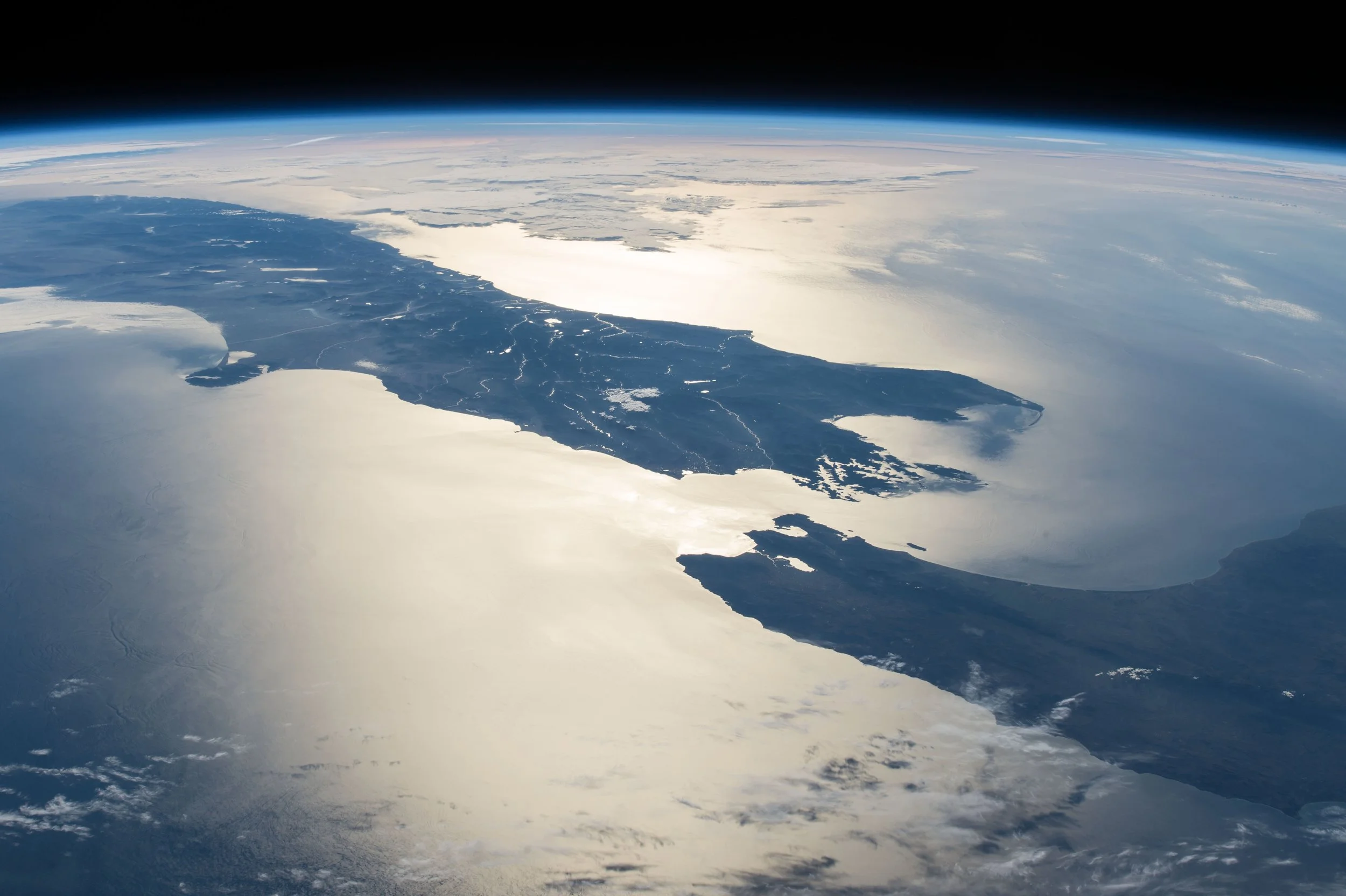
Encompassing Insight

Sterna Striata, the White Fronted Tern or the Kahawai Bird can be found along New Zealand’s entire coastline, where they thrive at the interface of the onshore-offshore domains. These efficient coastal Terns have New Zealand covered, fishing abundant SW Pacific waters, and nesting along sandy coastal plains to stony braided river banks.
Like our namesake, Sterna Ltd innately understands New Zealand’s surrounding offshore basin domain. While Sterna Striata is advantaged by precision diving techniques to efficiently fish, Sterna Ltd dives jointly into a banquet of open-file data, de-risking New Zealand’s untapped basin resource endowment.
We’re keenly aware that all offshore provinces aren’t created equal. Today, the strength of New Zealand’s prospective basin opportunities are reflected by legacy data coverage, historic scientific outputs, and a proximity to infrastructure.
From local research experience, we understand key remaining subsurface risks, and which geoscientific questions to address. We’ve optimised research objectives according to open-file data availability, honing our sights on 3 key sedimentary basins:
What We Do
-
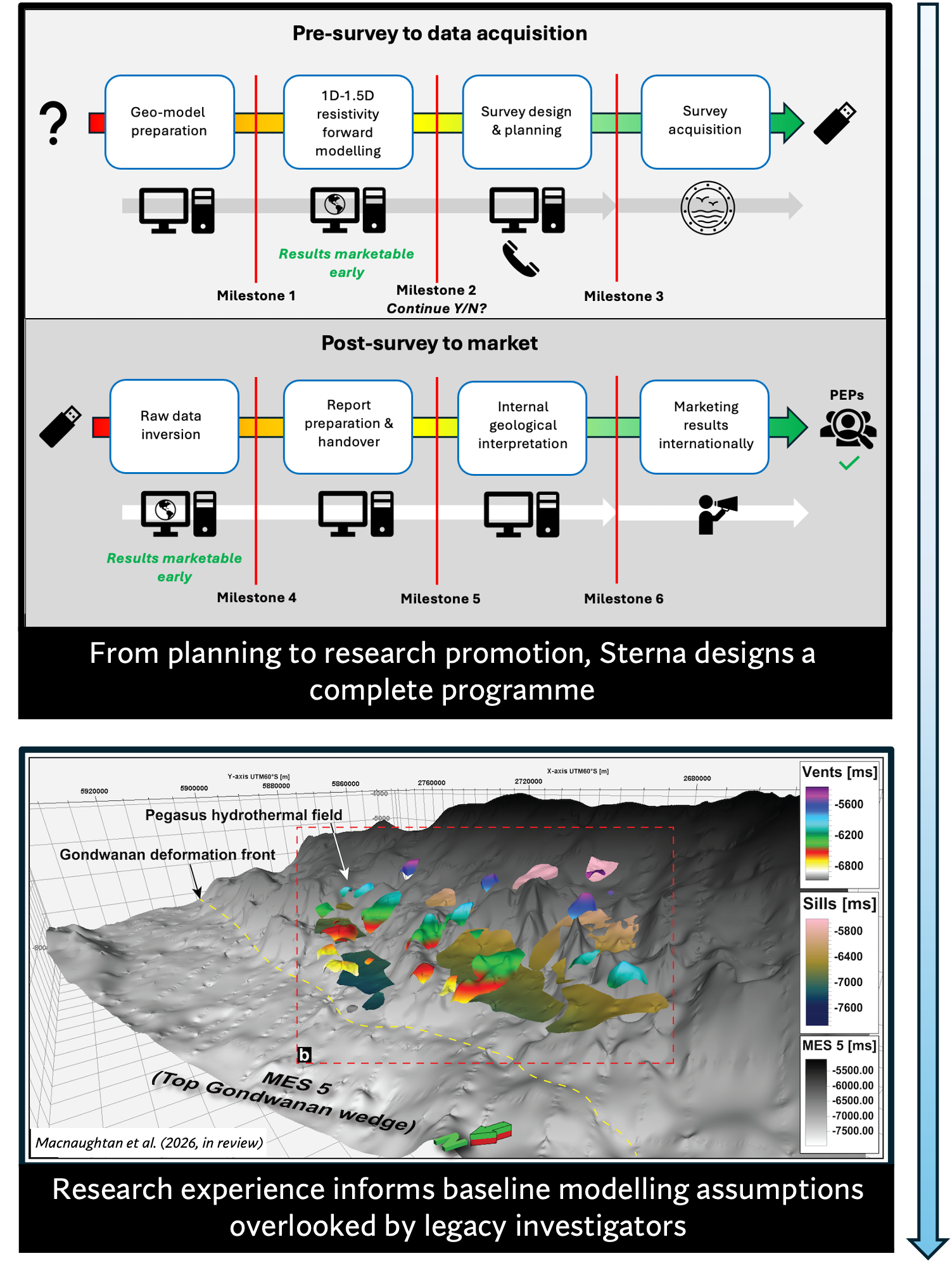
We define the critical uncertainties, design the technical strategy, and structure programmes around clear decision-making objectives.
-
We build geological, petrophysical, and physical-property models to test scenarios and guide survey design before any data is acquired.
-
We manage the specification, acquisition, processing, and inversion of geophysical data through best-in-class specialist contractors.
-
We interpret and integrate new data into seismic and basin frameworks to deliver coherent, decision-grade regional understanding.
Company Profile
Technical Oversight
De-risking complex subsurface geology requires world-leading technical expertise. Sterna’s projects are supported by several Internationally-recognised Scientists and commercially-minded professionals. Learn more about their experience.
Governance
Learn more about Sterna’s leadership team and their experience.
Founder
Sterna Ltd is founded by Dr Michael Macnaughtan, a Geoscientist from Auckland New Zealand with extensive experience studying New Zealand’s offshore basin domain. Learn about Michael’s background here
Recent Publications
Macnaughtan, M. T., Strachan, L. J., & Pecher, I. A. (2026). The Pegasus Basin Hydrothermal Field – Latest Mesozoic magmatic activity under the northwestern Chatham Rise, New Zealand. Marine Geology. (In review).